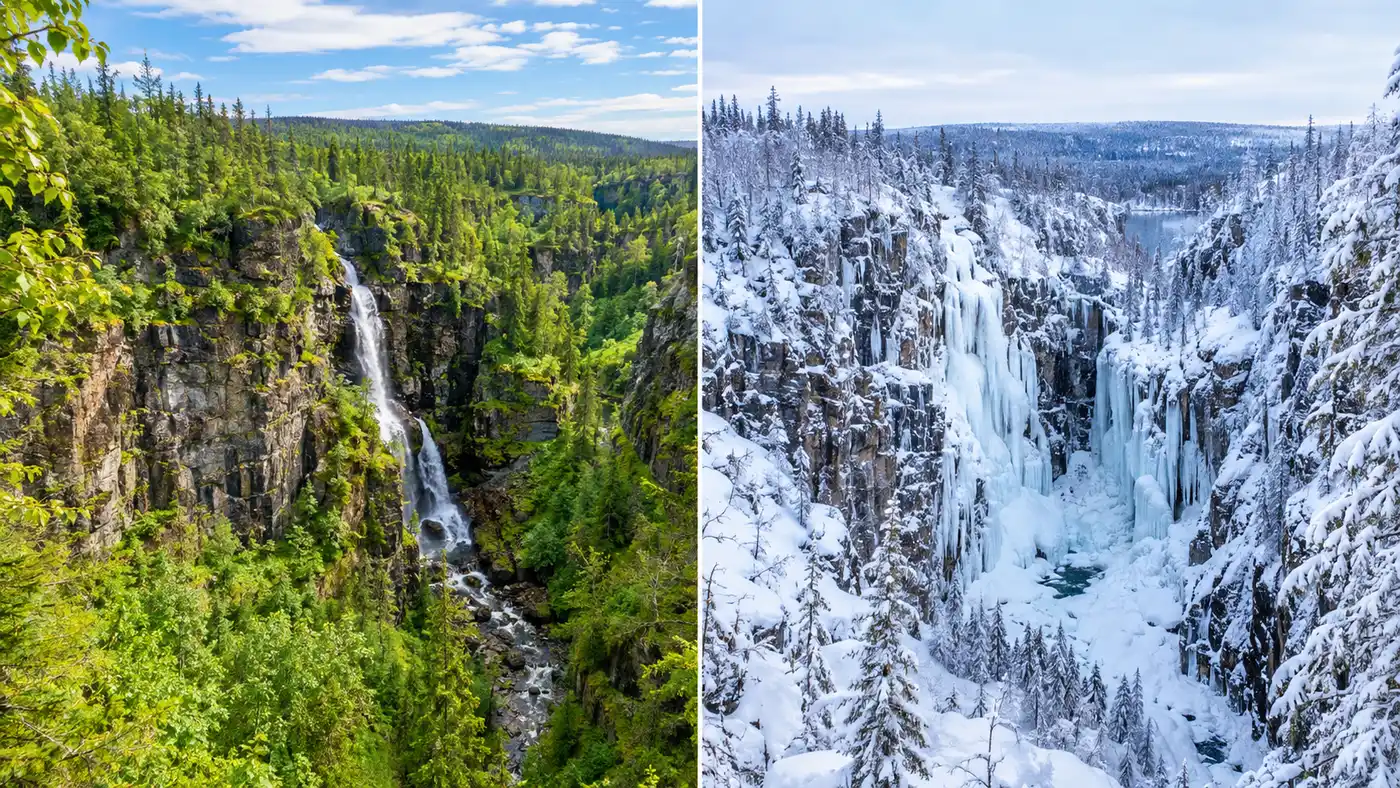
Korouoma Canyon in Summer vs Winter: Weather and Seasons
Most people only know the canyon from viral winter photos of frozen blue waterfalls. They picture a narrow arctic gorge draped in thick ice sheets, surrounded by snow-covered spruce trees and hikers bundled in heavy down parkas. Visiting korouoma canyon summer offers an entirely different landscape. The dramatic 130-meter fracture valley transforms into a quiet, emerald wilderness where the Korojoki River murmurs over rocks and rare cliff ferns cling to warm vertical granite.
Choosing when to visit depends on what you want from northern Finland. Both seasons have distinct personalities, dramatic weather shifts, and specific gear demands. If you show up in July expecting snowy drama, you will find lush boreal forest and buzzing insects. If you arrive in January without microspikes, you might spend your day sliding uncontrollably down icy cliffs. Here is what each season actually feels like on the ground, along with the weather realities you need to plan for.
Book your korouoma frozen waterfalls experience:
Summer in the Valley: What Korouoma Kesällä Really Feels Like
Walking into the reserve between June and August feels like stepping into a prehistoric pocket of Lapland. The canyon walls trap warmth. While the surrounding plateau might sit at a breezy 16 degrees Celsius, the valley floor often feels warmer and noticeably humid. Deciduous trees flourish here along the riverbanks, creating a dense canopy of birch, aspen, and goat willow that stands out against the usual pine barrens of northern Finland. Experiencing korouoma kesällä means trading snowshoes for sturdy hiking boots and swapping insulated jackets for a reliable bug shirt.
The Koronjää trail, so famous for ice in the colder months, becomes a shaded footway over exposed roots, muddy hollows, and wooden bridges. Water still drips down the massive rock walls where the icefalls usually cling, feeding moss patches and tiny alpine plants. The Korojoki River winds peacefully through the basin. It is shallow in midsummer, often crystal clear, reflecting the massive sheer rock bluffs rising above.
Daylight is endless. In late June and early July, the sun technically sets for only a few minutes before rising again, leaving the gorge drenched in golden twilight around midnight. You can start a hike at 8:00 in the evening, walk five kilometers down to the lean-to shelters, roast sausages over an open birch fire, and finish well after midnight without ever reaching for a headlamp. Crowds thin out considerably compared to the winter rush. You might pass two or three local fishermen casting for trout and grayling, but otherwise, the canyon remains empty.
Pro tip: Bring a head net and botanical insect repellent from late June through July. The mosquitoes and blackflies gather heavily near the riverbed, especially on calm, humid afternoons.
Packing properly makes the difference between an idyllic forest walk and a frustrating battle with the elements. Summer trail prep should focus on mud resistance and insect defense:
- Footwear: Waterproof trail runners or broken-in leather boots, because wooden stairs and river boardwalks get slippery after rain.
- Insect protection: A fine-mesh bug head net, light long-sleeve layers, and a local repellent containing DEET or picaridin.
- Rain gear: A lightweight hardshell jacket, since sudden arctic showers can blow in over the gorge rim without warning.
- Hydration: At least 1.5 liters of water per person, or a reliable water filter if you plan to drink from mountain springs.
Korouoma Canyon Winter: The World of Blue Ice
Everything flips when November arrives. The cold air sinks directly into the canyon floor, creating a severe temperature inversion. It is common for the parking area at Saukkovaara to sit at minus 12 degrees while the bottom of the gorge registers minus 23. Water seeping from the plateau above freezes layer upon layer along the 30-meter cliffs. By mid-December, massive frozen waterfalls cling to the brown rock, glowing in bizarre shades of pale turquoise, milky white, and deep amber.
Visiting korouoma canyon winter trails feels otherworldly. The silence is heavy, broken only by the crunch of compacted snow beneath your boots or the thud of an ice axe from climbers tackling the famous Ruskea virta ice wall. If you want to see technical climbers swinging axes into frozen columns, exploring our guide to ice climbing in Korouoma Canyon gives a deeper look into how those routes form. The frozen landscape draws travelers from all over the world, making winter the undisputed peak season for tourism here.
Daylight is your biggest constraint during korouoma talvella. In December and January, the sun barely skims the horizon, giving you about three or four hours of usable dusk. You have to pace yourself carefully. The descent from the main parking lot down into the canyon drops around 100 vertical meters over a steep gravel access road that turns into pure, polished water-ice. Walking down without proper traction is nearly impossible without falling.
Note: Microspikes or crampons are mandatory between November and April. Standard hiking boots with rubber soles offer zero grip on the polished access hill.
The shelters along the river become social hubs in winter. Hikers gather around the open hearths at the lean-tos, sharing kettle coffee, drying out damp gloves, and thawing lunch supplies. The air smells of woodsmoke and crisp pine needles. Even on brutal midwinter days when your eyelashes freeze white within ten minutes, the lack of wind down inside the valley makes the deep cold surprisingly manageable if you wear wool base layers.
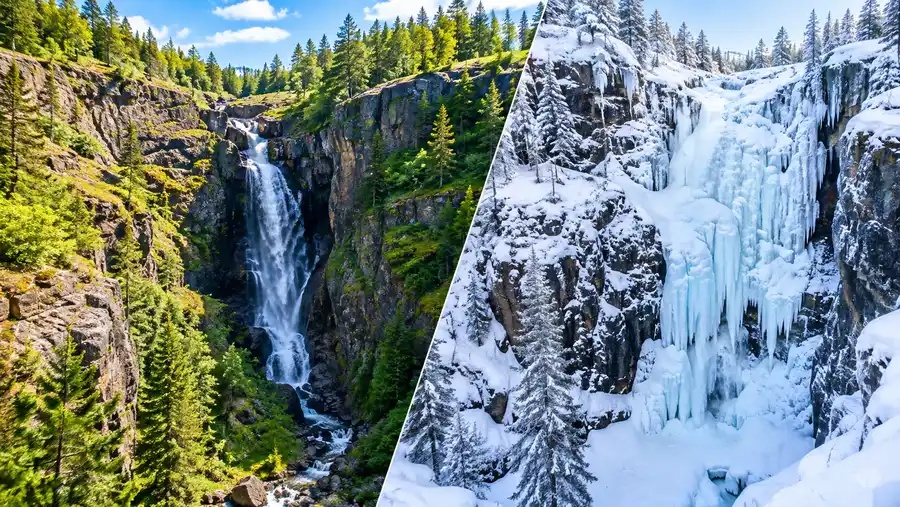
Comparing the Seasons: Weather, Crowds, and Trail Conditions
Local weather patterns dictate your entire experience in Posio. The canyon sits roughly 110 kilometers southeast of Rovaniemi, tucked into an elevated transition zone where inland arctic weather meets southern forest systems. Understanding sää korouoma forecasts before leaving your accommodation is essential, as the weather changes fast between the high plateau and the valley basin.
To help you weigh your options, this breakdown compares what to expect on the trail across the two peak periods of the year:
| Factor | Summer (June to August) | Winter (December to March) |
|---|---|---|
| Average Daytime Temp | +14°C to +22°C | -8°C to -22°C |
| Daily Sunlight | 19 to 24 hours (Midnight Sun) | 3 to 5 hours (Polar Twilight) |
| Trail Footing | Damp dirt, tree roots, wooden steps | Hard-packed snow, slick water-ice |
| Visitor Volume | Low to moderate; quiet paths | High; guided tour groups daily |
| Required Footwear | Trekking shoes or hiking boots | Insulated winter boots plus microspikes |
| Primary Attraction | Lush canyon flora, river fishing | Massive frozen blue waterfalls |
Checking the current korouoma sää before heading out helps prevent unpleasant surprises. In winter, temperatures lower than minus 25 degrees sometimes shut down guided tour operators for safety reasons, while summer thunderstorms can fill trail hollows with ankle-deep mud in thirty minutes.
Book your korouoma frozen waterfalls experience:
Practical Realities: Korouoma Kokemuksia Across the Calendar
Reading personal reviews and gathering honest korouoma kokemuksia reveals a clear pattern: summer visitors praise the solitude, while winter visitors rave about the raw visual spectacle. Summer feels like a genuine wilderness hike where you must rely on your own trail sense. Winter feels like an alpine expedition, complete with organized bus groups, busy fire pits, and well-trodden paths beaten flat by hundreds of daily footsteps.
Winter logistics demand strict time management. If you park at the Saukkovaara lot at 11:00, you have roughly three hours of good photographic light before the gorge falls into deep blue shadows. Finding your way along the 5-kilometer loop trail in the dark is manageable because the track is packed hard, but you will miss the dramatic scale of the canyon walls. Reviewing the Korouoma Canyon hiking trails and route map ahead of time keeps you from making wrong turns at the river crossings when twilight fades.
Summer logistics, conversely, are laid-back. You can sleep in, enjoy an easy morning, and head out whenever you like. The parking lots rarely fill beyond a dozen vehicles in mid-July. If you enjoy trail running, botanical photography, or birdwatching, summer provides an untamed atmosphere that winter completely buries under snow.
Here are several practical considerations to evaluate before finalizing your travel dates:
- Travel style: Winter suits organized groups and photographers chasing frozen drama, while summer suits independent trekkers wanting quiet nature.
- Driving conditions: Road 81 between Rovaniemi and Posio gets heavily iced in winter, requiring careful winter driving habits and studded tires.
- Physical ability: The climb out of the canyon covers roughly 100 meters of elevation in under a kilometer; doing this on packed ice requires reasonable cardiovascular stamina.
- Gear availability: Winter demands specialized gear like spiked crampons, thermal snow pants, and insulated mitts, which summer travelers can leave behind.
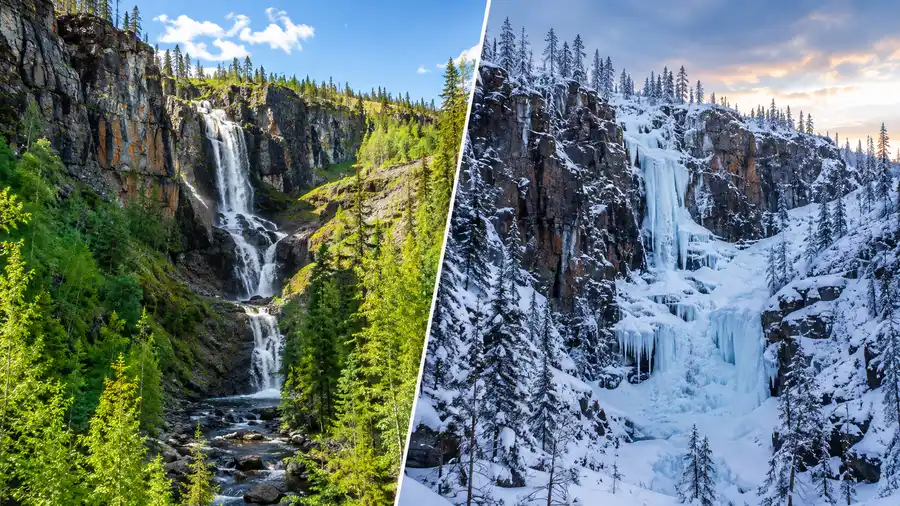
Autumn and Spring: The Brief Bridge Seasons
The shoulder seasons in Korouoma are short, intense, and frequently overlooked. September brings the famous Finnish ruska season. For about three weeks, the canyon turns incandescent with color. The birch and aspen trees along the Korojoki River turn bright butter-yellow and burnt orange, contrasting sharply against dark green pines and grey stone cliffs. The insect population dies off with the first August frosts, daytime temperatures hover around 9 degrees, and the air stays clean and sharp. Many Finnish hikers consider September the single best month for walking the full length of the 30-kilometer hiking route.
Spring, on the other hand, is rough. From mid-April through late May, Lapland enters kelirikko, the seasonal thaw. The thick river ice roars as it breaks apart, sending massive ice slabs tumbling down the gorge. The frozen waterfalls crash down the rock faces in dangerous avalanches of melting slush. Trails turn into torrents of meltwater, wooden staircases become slick with rotting snow, and the lower boardwalks often sit completely submerged. Unless you are an experienced hiker prepared for cold mud and wet boots, May is the one month best spent elsewhere.
Frequently Asked Questions about korouoma canyon summer
Is Korouoma Canyon worth visiting during the summer months?
Yes, especially if you prefer quiet trails and lush landscapes over winter tourist crowds. The gorge reveals towering rock walls, rich plant life, rare mosses, and pleasant river walking that stay completely hidden under snow during winter.
Are the waterfalls completely dry in summer?
The giant frozen icefalls disappear, but small trickles of water continue cascading down the rock faces into the river. While not as visually massive as the winter ice walls, the rock cliffs themselves remain impressive.
Are insects a major problem on the summer trails?
Mosquitoes and small biting midges can be heavy from late June through late July, particularly near the Korojoki riverbed. Bringing a lightweight bug net and wearing long sleeves keeps your hike comfortable.
Quick Reference
- Summer peak: Late June to August (+18°C, endless daylight, few crowds)
- Winter peak: January to March (-15°C, massive blue icefalls, heavy snow)
- Best foliage: September for vibrant autumn birch colors
- Access note: Saukkovaara steep road requires spikes in winter
Book your korouoma frozen waterfalls experience:
The Bottom Line
If you want jaw-dropping photographs of massive blue ice columns and do not mind sharing the trail with guided groups, visit between January and March. But if you value peaceful woodland trails, midnight sun walks, and the sound of rushing river water without another soul in sight, plan your trip for summer. Check the forecast before you leave, pack appropriate footwear for the season, and take your time descending into the deep gorge.
Read more about korouoma frozen waterfalls.