Ice Climbing in Korouoma Canyon
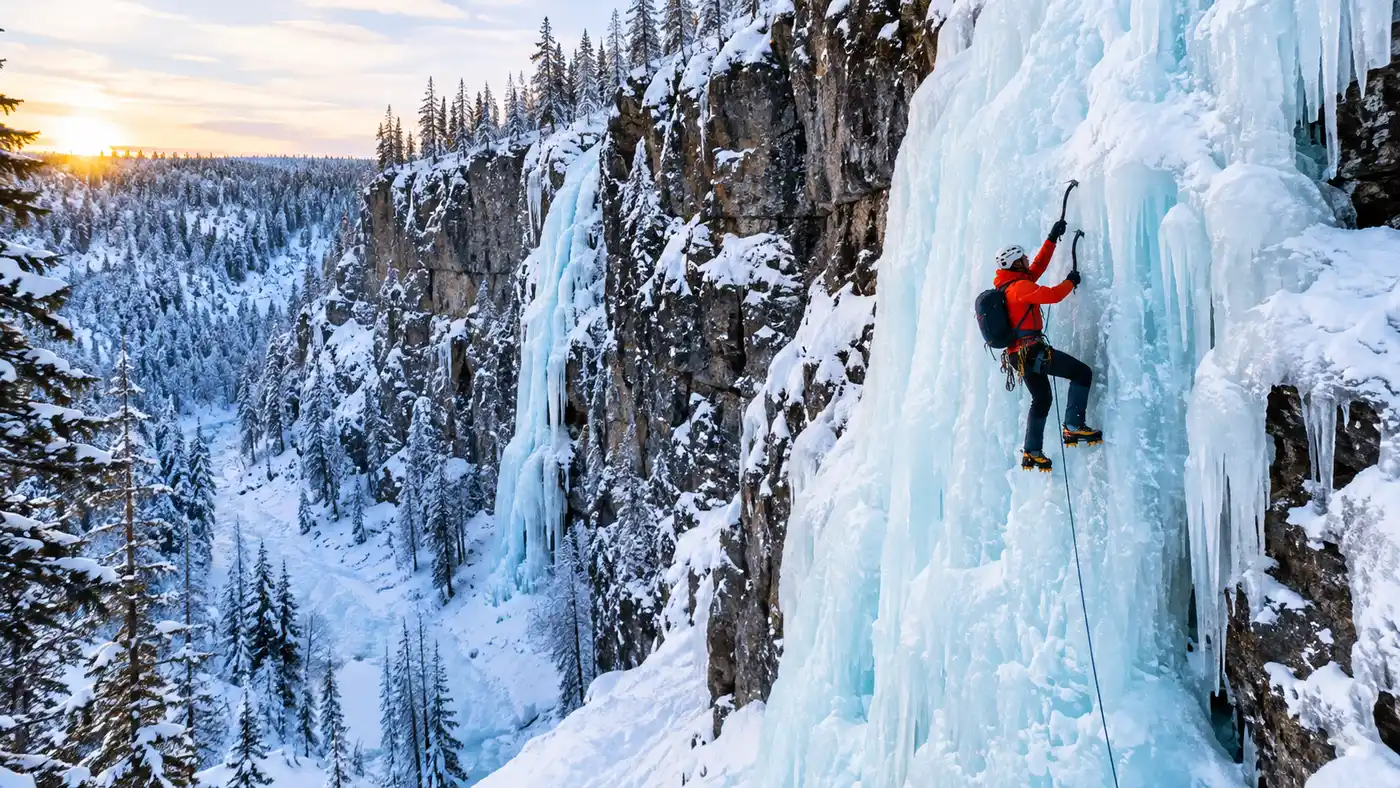
The wind cuts out the moment you drop below the rim of the canyon. Up top, the pine trees bend under thick pillows of powder, but down on the canyon floor, the cold air just sits there, trapped and motionless at minus eighteen degrees. You hear the dull, hollow thud of steel striking hard ice long before you clear the spruce grove. That sound echoes off the rock walls like a slow hammer. For anyone obsessed with vertical frozen water, korouoma ice climbing is the undisputed center of the Finnish winter scene, drawing climbers from Helsinki to Tromsø to hack their way up towering sheets of blue and amber ice.
Every December, groundwater seeping from the surrounding plateau spills over quartzite cliffs up to a hundred meters high. By January, those trickles morph into colossal frozen cascades that cling to the rock until late April. It feels wild and remote, sitting roughly thirty kilometers outside the tiny ceramic town of Posio. Whether you are swinging tools for the first time on a top rope or leading steep, chandeliered ice pitches that make your calves burn, this fracture valley holds something special.
Book your korouoma frozen waterfalls experience:
Why Korouoma Ice Climbing Draws People North
Most people associate Lapland with reindeer sleds, Santa Claus, and sleepy snowshoe walks through silent woods. Korouoma is different. It has an edge to it. The gorge was carved out hundreds of millions of years ago by ancient bedrock fractures, creating a dramatic, deep gash across the landscape that runs for thirty kilometers. In the darker months, when the sun barely peeks over the southern horizon for three hours a day, the canyon turns into an ice palace that feels completely disconnected from the rest of the world.
It is surprisingly accessible compared to big alpine routes. You do not need skis, skins, or an eight-hour glacier approach to reach the climbs. You park in a plowed gravel lot, pull on your pack, and hike straight down into the valley. Within forty minutes, you are standing at the base of massive frozen flows. The ice here forms thick and dependable, fed by a continuous supply of bog water and spring runoffs. Even during warmer winters when Scandinavian ice resorts further south turn to slush, Korouoma stays deeply frozen.
There is also the peculiar nature of the ice itself. Because much of the water filters through peat bogs before trickling over the cliffs, the falls take on weird, beautiful hues. Some routes are pale blue and brittle, while others glow deep orange or rich caramel under headlamps. Climbing an amber wall surrounded by frost-caked black spruce feels alien. You swing your picks, clear the dinner plates, and settle into the rhythm of Lapland winter.
The Main Frozen Falls: Ruskea Virta and Beyond
The canyon hosts more than a dozen distinct ice formations, but three or four major flows steal the show each season. The undisputed monarch of the reserve is ruskea virta, the "Brown River." It is easily the tallest continuous sheet of ice in Finland, dropping about sixty meters down a steep rock face. Depending on how the water freezes in early December, the line can offer everything from moderate rolling steps to steep, pumping vertical sections. On any given Saturday in February, you will spot several ropes hanging down its face.
A short walk past the main fall brings you to Mammuttiputous, the Mammoth Fall. It is wide, reliable, and slightly friendlier for climbers working on technique. Further along sits Jaska Jokunen, named after Charlie Brown, which often forms into a steeper, technical curtain with delicate pillars. Exploring these flows gives you a crash course in how temperature and rock shape dictate ice quality. Early in the season, the ice can be plastic and forgiving. By late January, under sustained sub-zero snaps, it turns into hard, splintering glass that demands precise, confident swings.
Pro tip: If you want Ruskea Virta entirely to yourself, sleep at one of the open wilderness huts nearby and start your hike at dawn. Day trippers arriving on guided day trips from Rovaniemi rarely reach the base of the ice before eleven in the morning.
| Ice Fall Name | Approx. Height | Ice Grade (WI) | Approach Time | Best For |
|---|---|---|---|---|
| Ruskea Virta | 60 meters | WI3 to WI5 | 45 minutes | Multi-pitch, classic Lapland lines |
| Mammuttiputous | 35 meters | WI3 to WI4 | 35 minutes | Top-roping, steep progression |
| Jaska Jokunen | 45 meters | WI4 to WI5 | 50 minutes | Technical pillars, experienced leads |
| Revontuliputous | 30 meters | WI3 | 40 minutes | Beginners, relaxed climbing |
| Pieni Ruskea Virta | 25 meters | WI2 to WI3 | 55 minutes | Low-angle practice, first leads |
Moving between the lines requires some patience. Deep snow covers the boulder fields along the base of the cliffs. If you stray off the packed climber track, you will quickly find yourself hip-deep in powder, swearing under your breath with heavy steel crampons strapped to your pack. Stick to the main footpaths beaten down by other climbers and winter hikers.
Organizing Your Trip: Guiding, Gear, and Logistics
Planning an ice outing here requires deliberate thinking. If you search for local beta online, you will often find Finnish climbers discussing korouoma jääkiipeily on forum boards, sharing recent photos of ice thickness and wall conditions. The climbing community in Finland is modest, close-knit, and genuinely helpful. If you reach out through local climbing clubs or social channels, people will usually tell you straight whether the flows are fully formed or still running wet underneath.
For unguided climbers, self-sufficiency is non-negotiable. You need your own rack of ice screws, double sixty-meter ropes if you plan to link long pitches or rap from the top trees, and plenty of webbing. Many trees above the canyon edge serve as solid anchors, but you must bring enough cord to build extended setups without damaging the fragile birch and pine crowns. Inspect everything twice before lowering. The cold makes webbing stiff, snaps gate springs shut, and freezes carabiners tight.
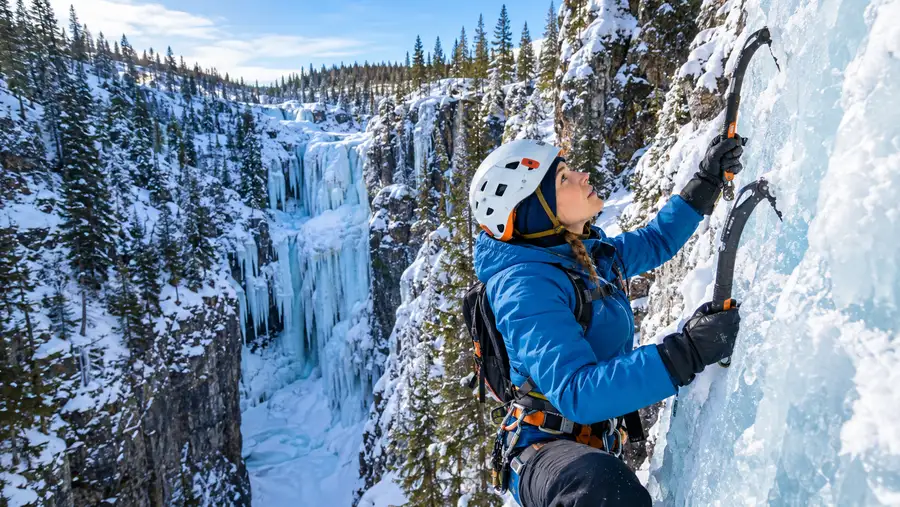
Novices should never walk down here expecting to figure it out on the fly. Ice climbing is inherently dangerous, and Korouoma adds Arctic environmental exposure to the equation. Fortunately, several guide companies based out of Posio and Rovaniemi run introductory days. They provide technical double mountaineering boots, crampons, curved ice tools, harnesses, and helmets. Most importantly, guides handle the anchors and ropes, letting you focus on kicking your front points into the wall without managing terminal fall risks.
- Guided introductory packages: ideal for beginners, includes technical boots, tools, and a heated campfire lunch.
- Self-guided gear rentals: available in Posio or Rovaniemi, requires advance booking during peak February weeks.
- Vehicle requirements: winter tires with metal studs are required by law and essential on the winding forest roads leading to the Saukkovaara trailhead.
- Daily timing: aim to finish climbs by mid-afternoon before twilight fades and canyon temperatures plummet rapidly.
Book your korouoma frozen waterfalls experience:
Practical Preparation: What to Wear and What to Bring
Layering for Arctic ice climbing is an art form. When you are belaying at the base of the wall, you are standing motionless on frozen ground for forty-five minutes. Your body stops generating heat, and the canyon floor acts like an open freezer chest. Ten minutes later, you are halfway up a pitch, swinging hard, sweating through your base layer, and fighting off burning forearm pump. Managing sweat is the difference between an amazing day and hypothermic misery.
Leave heavy single parkas in the car while climbing. Instead, wear a moisture-wicking wool base, a mid-weight fleece or synthetic grid jacket, and a tough softshell jacket that can handle scraping against sharp ice chunks. Over that whole system, throw on an oversized down belay jacket the second you step off the climb. You take it off right before you tie in, and put it straight back on as soon as your partner lowers you to the ground.
Note: Natural hazards extend beyond falls. Falling ice is a constant danger in the canyon, particularly on warmer days when the sun hits the top cliffs or when climbing parties are working routes directly above you.
Hands require special attention. Never bring just one pair of gloves. Ice climbing destroys gloves through wet slush, sharp picks, and friction on cold metal. I always carry three pairs into the canyon: one thin pair for leading with maximum tool feel, one warm insulated pair for belaying, and a pair of thick expedition mitts stuffed inside my jacket to warm frozen fingers between climbs. If your lead gloves get wet, swap them immediately.
- Footwear essentials: rigid mountaineering boots (B2 or B3 rated) with automatic or semi-automatic crampons that fit snugly without loose heel play.
- Hydration strategy: standard hydration bladders freeze inside their tubes within thirty minutes; carry wide-mouth insulated thermoses filled with boiling tea or lingonberry juice.
- Navigation and lighting: bring a powerful headlamp with a spare lithium battery kept inside a warm chest pocket, as phone batteries die quickly in sub-zero cold.
- Emergency kit: pack a lightweight bivvy sack, chemical hand warmers, and basic trauma supplies since wilderness rescue down in the gorge takes time.
Navigating the Canyon Base and Safety Realities
Getting into the canyon is straightforward; getting out is a workout. The main descent from the Saukkovaara parking area follows a steep, winding path through old pine forest. In mid-winter, this slope becomes polished hardpack from hundreds of hikers and climbers slipping down on their heels. Trying to hike down this track in smooth street shoes is a disaster waiting to happen. Put your microspikes or crampons on right at the trailhead gate.
Down at the bottom, marked trails follow the Korojoki river. The river stays open in several spots throughout winter due to fast-moving current, hidden under deceptive shelves of fragile snow. Never attempt to take shortcuts across the river ice unless you see an established wooden bridge or an officially marked boardwalk crossing. Falling into Arctic river water with a heavy pack on is a catastrophic situation.
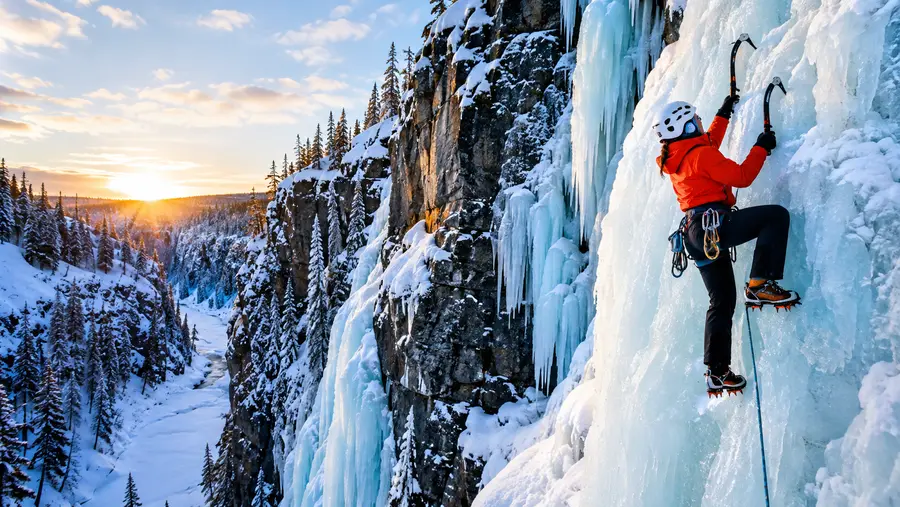
Be aware of hikers gathered below. Because Korouoma is famous across Finland, hundreds of day tourists walk the canyon trail on sunny winter weekends. They naturally stop to watch climbers on Ruskea Virta. Ice climbers generate debris, and falling chunks of hard ice can easily fracture a skull or break a collarbone. Always keep your helmet on, even when hanging out at the packs, and firmly warn casual hikers to stand well back from the fall line if they gather too close to the base of your ropes.
Understanding the local conditions before heading down the trail is vital. Take time to read up on winter weather conditions in the region, because a shift of just five degrees can turn brittle, cracking ice into wet, soft plastic, completely transforming your safety margins.
Frequently Asked Questions about korouoma ice climbing
What is the best month for ice climbing in Korouoma?
Late January through mid-March offers the most stable conditions. By late January, the major waterfalls like Ruskea Virta are thick and fully formed, while February brings slightly longer daylight hours and crisp, reliable freezing temperatures.
Can beginners try ice climbing in Korouoma without experience?
Yes, but you should book a qualified local guide. Guides provide all the specialized safety gear, set up top-rope anchors from above, and teach basic tool and crampon technique on gentle, low-angle ice falls.
How do I get to Korouoma Canyon from Rovaniemi?
The canyon is about 110 kilometers southeast of Rovaniemi. The drive takes around an hour and a half by car along Route 81 towards Posio. Guided tours frequently include return van transportation directly from Rovaniemi hotels.
Quick Reference
- Location: Posio, Finnish Lapland (110 km from Rovaniemi)
- Season: Late December to mid-April
- Main route: Ruskea Virta (60 meters, WI3-5)
- Access: Saukkovaara parking lot with marked trail descent
- Difficulty range: Introductory top-ropes to technical multi-pitch
Book your korouoma frozen waterfalls experience:
Before You Tie In
Standing at the bottom of the canyon looking up at sixty meters of frozen caramel ice will make your stomach drop just a little. That is part of the fun. Korouoma is one of those rare Arctic destinations that manages to live up to its reputation without feeling overly commercialized or sanitized. Pack plenty of warm layers, sharpen your front points, respect the weather, and you will come away with one of the most memorable climbing days of your life. Take your time hiking back up that steep canyon hill at dusk, sip the last of your warm thermos tea, and let the quiet cold of Lapland sink in.
Read more about korouoma frozen waterfalls.